
"You're a what kind of designer?"
Instructional designers have been around for a long time in a variety of industries and fields, but a lot of people are confused about what they actually do.
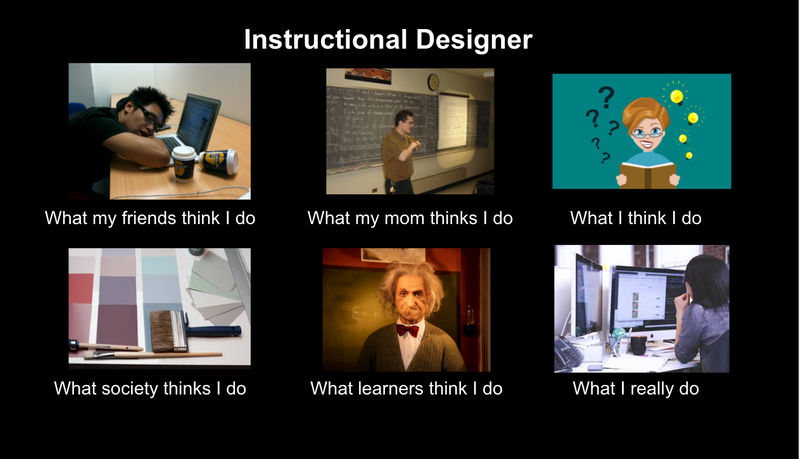
Instructional design is all about designing effective learning experiences for workplace employees and students in educational environments.
But how do you know if you'd enjoy actually being an instructional designer (ID)? What exactly does the job entail?
How Do Instructional Designers Contribute?
IDs find gaps in performance, skills, or attitudes, and create learning experiences (like elearning, in-person training, or other resources) to solve them.
The result? IDs help learners in workplaces and educational institutions build skills, knowledge, and confidence.

The Actual Job
IDs/LDs are often responsible for:
Understanding learning needs. The job involves a lot of interviews, needs analyses, observation, and research.
Pitching the right learning solution. Making recommendations for the best way to meet learning needs.
Writing and designing the solution. Actually create the learning solution. Some IDs use software and AI-powered tools to design elearning courses themselves. Others work with media designers to bring their plans to life.
Managing stakeholders. IDs will often coordinate with subject matter experts and clients. Sometimes, IDs may work with a designated project manager to help with this.
 Life as an ID.
Where Can You Get Work As An ID?

Corporate Learning and Development (L&D) Teams
Designing training for employees
Most big companies have an L&D team
Mid-size organizations may have one ID who is responsible for all training

Higher Education Institutions
Designing courses for students and supporting instructors in adapting to elearning
Most universities and colleges have IDs or a technical support team
Quiz
Which of these places most likely hire IDs? Select all that apply:
You'll Love It If...
You're curious and like learning about new things.
You're a problem solver who enjoys working on projects that have a lot of moving parts.
You're collaborative and can help a group of people reach an agreement.
You're data & tech-savvy and can keep up-to-date with new technologies and learning trends.
You have strong writing skills. You need to reach learners and explain concepts to them through clear and impactful messaging.

Look For Another Career Path If...
You hate sitting at a desk. Staring at a computer for most of the day sounds awful.
You like to have a consistent routine. Each project will have you learning about different topics and talking to different people.
You like clear "right" and "wrong" answers. Being an ID involves experimentation.

But Will It Pay The Bills?
 In the U.S., the average salary for IDs is $81,000 USD.
 In Canada, the average salary for IDs is $71,000 CAD.
Pick The Future Instructional Designer
 Raj
Raj
Very outgoing, loves meeting people
Tends to pick up new hobbies for a few months and then move on to a new one
Helped his little sister get As on her math and science exams
 Kendall
Creates fun video content on her Instagram
Is usually very shy when meeting someone for the first time
Feels intimidated by graphs and charts
 Jeremy
Friends always ask him to edit their essays because he is so detail-oriented
Hates unexpected changes to his routine
Uses tools like ChatGPT to make study plans for himself in school
Quiz
Who sounds like the best fit for an instructional designer's career path?
Take Action

Does it sound like instructional design could be a good path for you?
If it does...
Your feedback matters to us.
This Byte helped me better understand the topic.