
It's easy to see why people confuse Ancient Greece and Ancient Rome.
These two ancient Mediterranean civilizations shared ideas, gods, and magnificent buildings. However, each civilization had its own unique beliefs, government, architecture, and way of life.
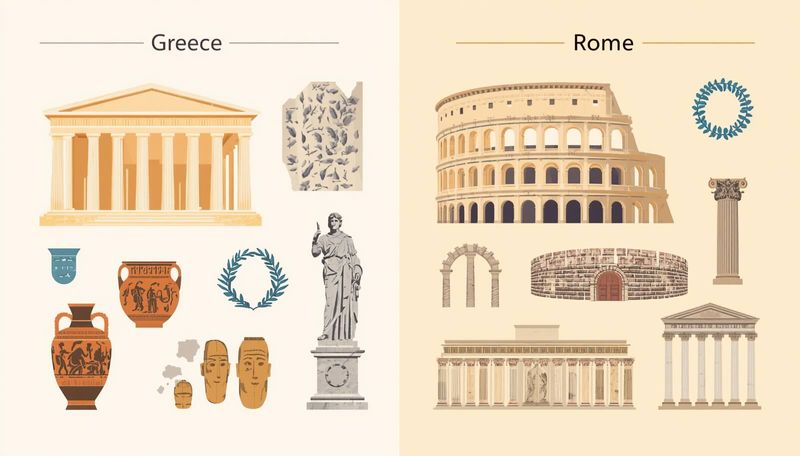 Image created by author with Canva
Recognizing the differences between Ancient Greece and Ancient Rome will help you understand how each civilization shaped the world in its own unique way — and see their influence in our lives today.
Meet the Two Civilizations

Which came first: Ancient Greece or Ancient Rome?
If you guessed Greece, you're right!
Greek civilization began between 2500 and 1200 BC, while the city of Rome didn't appear until around 753 BC.
By the time Rome was just getting started, the Greeks had already made their mark on history.
Ancient Governments
Ancient Greece was made up of independent city-states called poleis, each with its own government. Athens was famous for its early democracy, while Sparta was ruled by two kings and focused on military strength.
The video below explains how Ancient Greece "set the stage for modern democratic principles."
Ancient Rome grew into one large empire with a central government. It began as a republic led by elected officials before becoming an empire ruled by an emperor. Roman governors, roads, and laws helped manage its vast territory.
The first Emperor of the Roman Empire was General Augustus.
Watch this video for more information about the government in Ancient Rome:
The key difference between Romans and Greeks:
Greece was a collection of independent city-states.
Rome united many lands under one powerful government.
Ancient Art and Architecture
Both the Greeks and Romans created amazing art and architecture that still inspire us today — but they had different styles.
The Greeks focused on beauty, balance, and perfection, creating idealized statues and magnificent temples like the Parthenon. Their pottery also told stories about myths and everyday life.
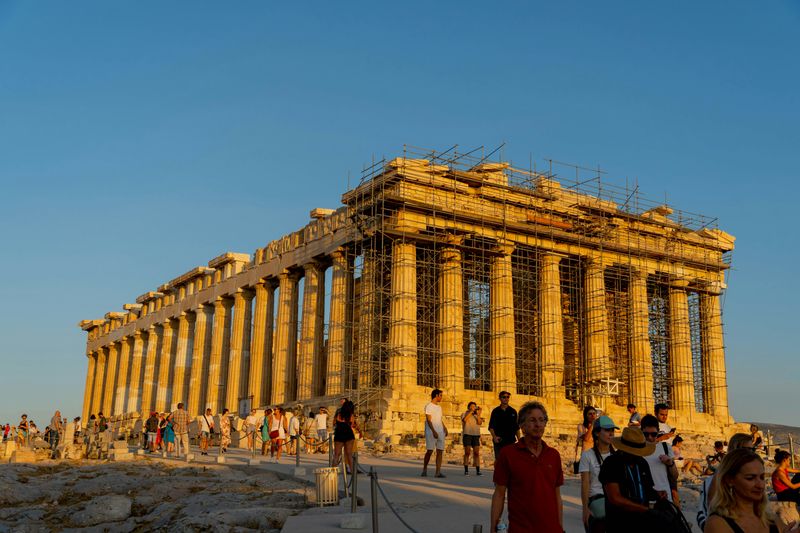 Photo by Andrey Nuraliev on Unsplash
The Romans admired Greek art but preferred a more realistic style, showing people as they truly looked. They were also brilliant engineers, building impressive structures like the Colosseum, aqueducts (water supply), and roads that helped connect their vast empire.
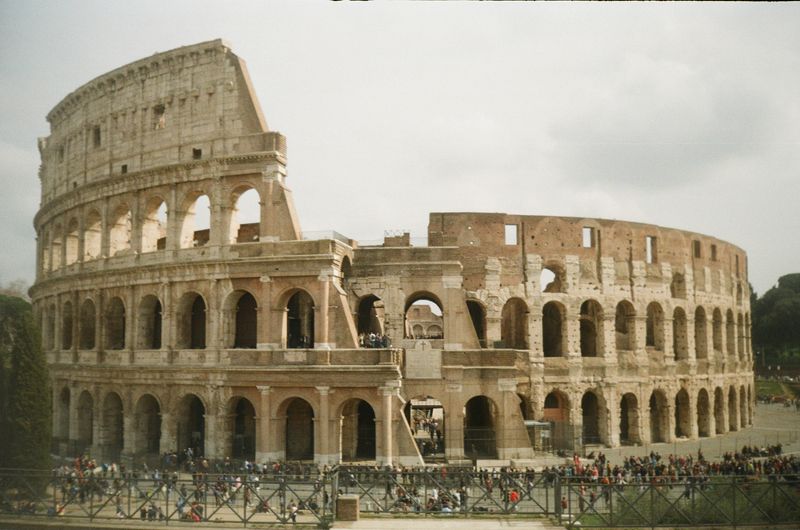 Photo by Andrii Zhuk on Unsplash
The Greeks were known for beauty and harmony.
The Romans combined beauty with practical engineering.
Ancient Religions
Religion was an important part of daily life in both Ancient Greece and Ancient Rome. Both civilizations believed in many gods and goddesses who controlled different parts of life, such as the sea, war, wisdom, and love.
 The Greeks worshipped gods like Zeus, Athena, and Poseidon, building impressive temples and holding festivals with music, dancing, and sacrifices in their honor. They also visited oracles, where they believed the gods answered questions through signs in nature.
The Romans adopted many of the same gods but gave them different names. For example, Zeus became Jupiter, Athena became Minerva, and Poseidon became Neptune. They worshipped in temples and at home, with many families keeping a small household altar for daily prayers.

The key difference between Romans and Greeks:
The Romans borrowed much of their religion from the Greeks but adapted it to fit Roman traditions and everyday life.
Time Travel Challenge
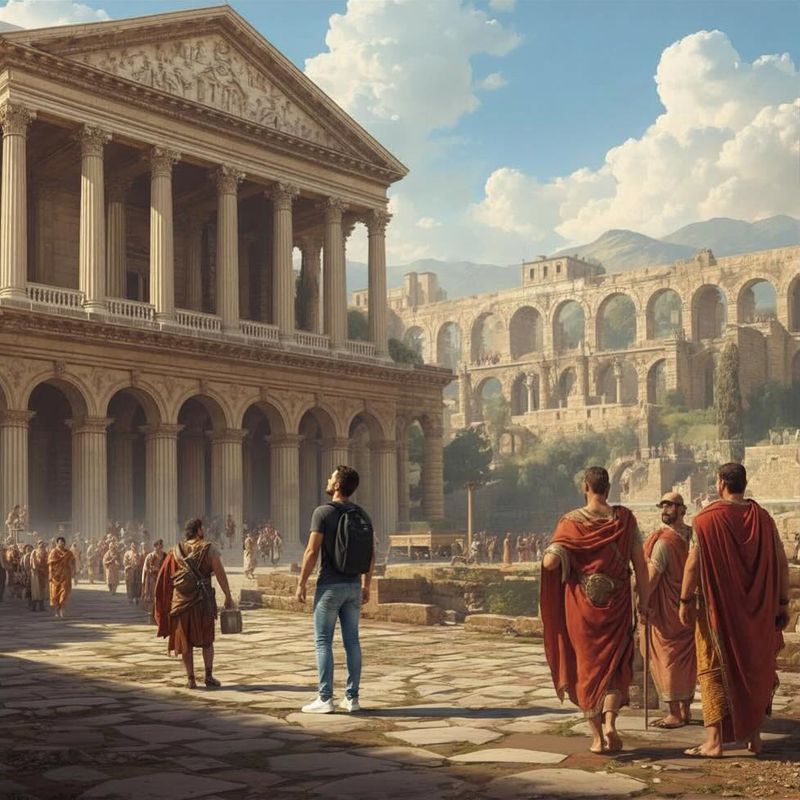 Image created with Canva
Quiz
You're traveling through time and arrive in an ancient city. You notice a huge building with arches, a nearby aqueduct carrying water into the city, and officials talking about laws that apply across a vast land.
Which civilization are you most likely visiting?
A. Ancient Greece, because the city is made up of independent city-states that vote on every decision.
B. Ancient Rome, because it was known for its engineering, central government, and empire-wide laws.
C. Ancient Greece, because it built aqueducts and ruled a large empire from one capital.
D. Ancient Rome, because it was the first civilization to invent democracy and the Olympic Games.
Quiz
Select the correct answer:
Take Action

Understanding the difference between Romans and Greeks helps you see how both civilizations shaped the world we live in today:
Greek democracy inspired modern governments where people vote to choose their leaders.
Roman law introduced ideas such as fair trials, written laws, and the belief that everyone should be treated equally under the law.
Greek philosophers encouraged people to ask questions, think critically, and use logic to solve problems — skills we still use in schools and science today.
Greek and Roman architecture continue to inspire buildings, monuments, and artists around the world.
Check out these resources to learn more about:
Your feedback matters to us.
This Byte helped me better understand the topic.