Have you ever been unsure whether something happens in July, on July 3rd, or at 3 p.m.?
Small words like in, on, and at can make English feel confusing fast. They look tiny, but they play a big role in helping people understand when something happens.
The good news? Once you learn the simple patterns behind these words, you can talk about time clearly and confidently — whether you’re messaging a friend, planning your day, or writing an email at work.

The Big Picture: How These Words Work
Think of in, on, and at as zoom levels:
in = the big picture
on = medium detail
at = the exact moment
For example: We'll meet at the park on Saturday in the afternoon.
You're choosing how close or far you want to “zoom in” on time.
 Photo by Murray Campbell on Unsplash
In: Big Chunks of Time
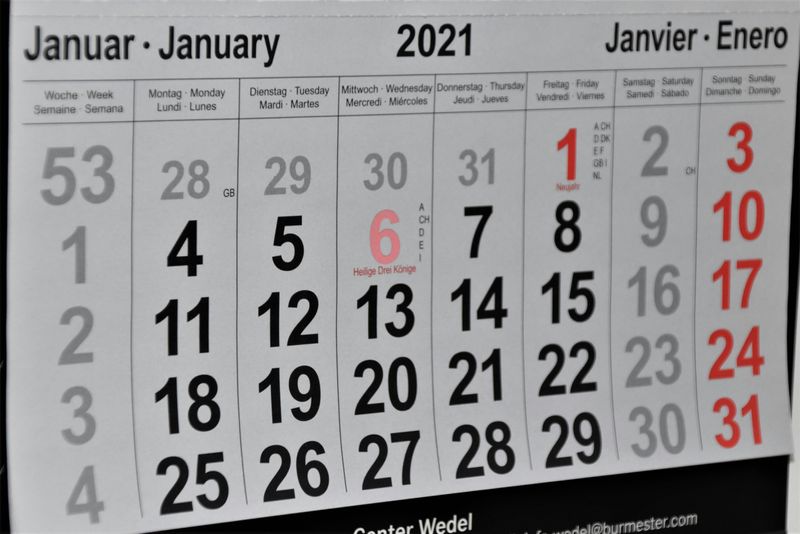 Photo by Waldemar Brandt on Unsplash
Use in for longer time periods:
months: in April
years: in 2024
seasons: in winter
long periods: in the morning / in the afternoon / in the evening
decades or eras: in the 90s
Examples:
I’ll travel in July.
She started college in 2022.
Quiz
Which sentence uses the preposition “in” correctly to talk about time?
On: Specific Dates
Use on when the time is a single day.
You’ll use it for:
Days of the week: on Monday
Dates: on March 1
Day + time words: on Friday night / on the weekend (US)
Special days: on my birthday
Examples:
We’re meeting on Saturday.
His exam is on November 12.
 Now watch the video below to learn more about different time prepositions. As you go through it, try to guess which preposition fits each question. Pause the video, make your choice, and then check your answer!
Quiz
Which sentence uses the preposition “on” correctly to talk about time?
At: Exact Moments
 Use at when the time is precise.
You’ll use it for:
Clock times: at 4:30
Exact points in the day: at noon / at midnight
Some common phrases: at the weekend (UK) / at lunchtime
Examples:
The movie starts at 8 p.m.
I wake up at sunrise.
Quiz
Choose the words that correctly complete the sentence. "You have a job interview ___ 9:00 ___ Monday ___ March."
Take Action
 Here are some quick things you can do right now to practice:
Your feedback matters to us.
This Byte helped me better understand the topic.