Have you ever been asked a job interview question that suddenly feels like a trap?

“How do you use AI for work tasks?” is becoming more common in interviews, and many people aren’t sure how to answer it. You might worry about sounding too dependent on AI — or not tech-savvy enough.
Today, employers often want to know how you use AI, not just if you use it. They’re looking for people who can work efficiently, think critically, and use technology responsibly.
Learning how to answer this question can help you sound confident, adaptable, and ready for the modern workplace.
Start With the Reason You Use AI
Don’t jump straight into listing tools. Start with the how.
Most interviewers aren’t secretly trying to catch you “cheating” with AI. They usually just want to know how you work and solve problems.
You can talk about using AI to:
save time on repetitive tasks
organize ideas
brainstorm when you’re stuck
polish writing or emails
The key is to make AI sound like a helpful assistant, not the employee of the month.

Make It Clear That You're the Captain of the Ship
Companies want people who can think critically — not people who copy and paste whatever AI says at 2 a.m. Show that you're using AI to save your brain power for the things that really matter.
A strong answer shows that you:
review AI-generated work
check facts and details
edit the final version
add your own judgment and ideas
Basically: AI helps navigate the boat, but you’re still the captain of the ship.

Use a Real Example
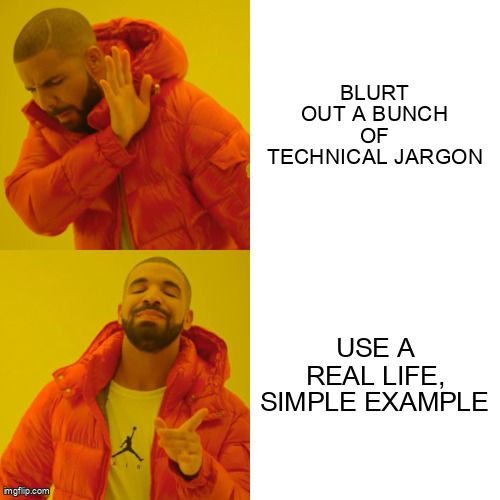
Real examples make your answer sound natural and confident.
You don’t need some super advanced tech story. Even simple examples work well.
For example:
I sometimes use AI to help organize meeting notes or brainstorm presentation ideas. Then I review everything carefully and adjust it for the project.
 Quiz
Quiz
Taylor is interviewing for an entry-level administrative assistant position.
Let's imagine Taylor is answering the question, “How do you use AI for work tasks?” in a job interview. Consider these four options:
A. I mostly use AI to speed up first drafts and organize ideas, but I still review the final work carefully.
B. I try not to use AI unless my manager tells me to.
C. AI is useful because it removes the need to spend too much time thinking about small tasks.
D. I use several AI tools every day and know more about them than most people.
Quiz
Which option would be the BEST for Taylor to use in her interview?
Show That You Can Adapt
AI tools change fast. Interviewers know that.
You don’t need to sound like an AI expert who builds robots in your garage. You just want to show that you’re open to learning new tools and trying smarter ways to work.
A flexible attitude can leave a really strong impression — especially in workplaces that are still figuring out how they want to use AI themselves.
Here are some types of answers that will look good to employers, versus some answers to avoid:
I am open to learning new AI tools.
I am excited to experiment with new technology.
I am able to adapt to the tools my team uses.
I am able to focus on using AI responsibly.
I am interested in improving efficiency and productivity.

I already know everything I need to know about AI.
I am committed to my current workflow.
I am comfortable with the AI tools that I use now and don't need to learn new ones.
I am resistant to learning new technology.
Adaptability In Action
Let's go back to Taylor's interview for an entry-level administrative assistant position.
The interviewer asks:
Let's say we ask you to use AI to help organize information from customer emails. How would you use it?
Consider the following answers:
Answer A
"I would use AI to help sort the emails into categories and highlight important information. I'd also learn how my team uses AI and adjust my process if there was a better way to do this task."
Answer B
"I have used AI to organize emails in the past. I will choose the best AI for this task and stick to a method that works."
Quiz
Which would be the best answer to give in an interview?
Take Action

Your feedback matters to us.
This Byte helped me better understand the topic.