
Have you ever walked around your neighborhood and thought, "Imagine what this place could be like without cars everywhere!"
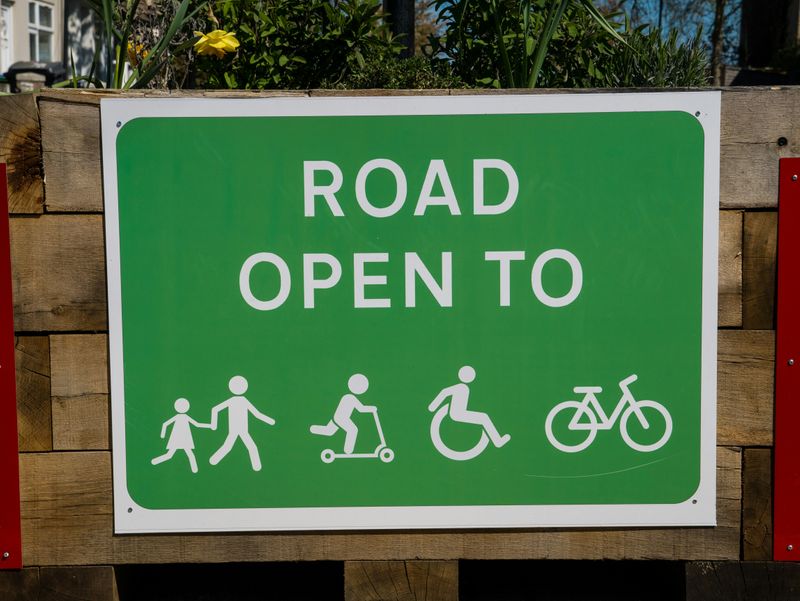
In North American cities, we've given up a LOT of space so that cars can get around — but our communities haven't gotten much in return.
We've let the safety, health, and vibrancy of our cities take a backseat, all so that cars can rule the road.
The book Life After Cars: Freeing Ourselves from the Tyranny of the Automobile argues that it doesn't have to be this way!
Its authors have been touring North American cities to deliver a message: if we end the dominance of cars, we can create better, healthier, and more inclusive communities with a higher quality of life for everyone.
Find out how you can be a part of this movement and help make this change happen for the future!

Cars Rule the Road, But Do They Have To?
Over the past century, cars have been promoted as a symbol of freedom, mobility, and progress. But it wasn't always like this.
 Image courtesy of stanleythemanley via Reddit
When cars started to show up in our cities in the early 20th Century, a lot of people weren't happy about it.
Many people felt that they were dangerous "death machines" that turned our cities into noisy, polluted, and unsafe places to live.
Over the years, the auto industry and fossil fuel companies have spent billions of dollars to promote a "rose-colored vision" of car ownership, but they don't want us to know the costs of cars and the damage they've done.
As the authors of Life After Cars argue, the reign of the automobile has come at a great cost to our communities:
Entire neighborhoods have been destroyed to build freeways, displacing communities and cutting people off from each other, leaving us with less access to green space.
Our reliance on cars to commute to work and school means that we spend more time stuck in traffic, away from our friends, families, and hobbies.
Driving is super-expensive. It costs around $13,000 a year to own a car!
The pollution from cars has made climate change worse, and caused many health problems like cancers and respiratory illnesses to rise.
Millions of people die every year in car accidents. Streets are more dangerous for all pedestrians, but especially kids, the elderly, and people with disabilities.
People who can't afford cars are at a disadvantage. It's hard for them to find safe and affordable ways to get around.
In many ways, cars are driving us.
Instead of living in walkable communities with reliable public transit and a vibrant street life, we're stuck in traffic, sacrificing our physical and mental health while the environment suffers and our wallets take a huge hit.

If we don't change how things are, we're headed for a crash. But is the crash inevitable? Can we build a more sustainable, equitable, and just society that doesn't rely on cars?
Life After Cars argues that yes, we can! Watch what Sarah Goodyear and Doug Gordon have to say about the ideas in their book:
It's time to radically rethink the dominance of cars, and free our streets for people — and YOU can be a part of this change! But how?
Change Perceptions
A lot of the TV shows and movies we watch are set in places like Los Angeles, where it's not "cool" to take the bus. We see a lot of young, upwardly mobile people driving around in flashy cars, so we're trained to think that this is as good as it gets.
But Friends wasn't like that. It was all about a group of people who lived in a walkable community, a few blocks away from each other and their favorite cafe. Imagine what their lives would have been like in a car-dependent city.

Those of us who walk, take transit, and ride bikes need to tell OUR stories.
We have to show the world that our lifestyle choices can be cool, too. Here are some ideas to help you spread that message:
Share videos of that bike ride you took through a beautiful park.
Post TikToks of your fave shops and restaurants near transit stations in your city. Show them how much money you saved by taking transit vs. driving, and how you spent that money on things you really love.
Fill your Instagram stories with highlights from your walks around town, showing off all the interesting places you go, whimsical observations you make, and fun things you do — all without a car.
Support Politicians — And Put Pressure On Them
Meet Ann Hidalgo, the Mayor of Paris since 2014.

In her time as Mayor, she's done a lot to move Paris toward a less car-dependent future. Her policies transformed Paris:
Local bike lanes and bike sharing stations now blanket the city.
The romantic promenades along the River Seine are now closed to traffic so that pedestrians and cyclists can enjoy them safely.
It was no easy task! Her plans faced major opposition at first. She couldn't have found success without building support. As Hidalgo told Sarah Goodyear in an interview, "All I'm trying to do is make life better for the people in my city." She got buy-in from Parisians by connecting her policies to issues of affordability, health and safety, and quality of life.
She's just one figure in a new generation of politicians who are willing to listen to advocates at a local level, like New York's Mayor Zohran Mamdani. He campaigned and won on a promise to make buses free, fast, and safe.
But while lots of politicians can talk the talk, many of them don't walk the walk. They often fall on old excuses:
"We're just local politicians! Only state and federal officials have the authority or the funding to change our cities."
"We can make these changes, but they'll take 30 years."
But Hidalgo and Mamdani prove that big changes can happen in a few years. You need to put pressure on your elected representatives. Meet with them and tell them how they can get your vote if they're willing to follow through on bold ideas and concrete plans.
Mobilize Your Community

You know the expression: "It takes a village."
You can't do it alone. What are some ways you can tap into your "village" to spread the message of change?
And remember that people are often resistant to change. There will be opposition among the villagers.
How do you get people on board?
Consider this scenario:
Your city council wants to change the streetscape on a busy road downtown. The plan includes a wider sidewalk, a separated bike path, and a dedicated bus lane. But because it will reduce traffic lanes, most of the drivers in the area and small businesses on the street are against the plan.
What are some ways to get people in your community on your side?
A. Organize a boycott of the stores on the street that are against the plan. Host loud and frequent protests up and down the street.
B. Visit a business on the street and talk to the owner. Listen to their concerns, then tell them how much you love shopping at their store. Explain how the new bike and transit lanes will bring more customers like you to their business.
C. Organize a "safety bike ride" along the street one weekend. Invite local families who have kids at the nearby school to ride with you. Share videos of the ride on social media to show how much demand there is for a safe bike path in the area.
D. Go on social media and respond to every negative comment about the plan. Destroy their arguments with logic and facts!
Quiz
Choose the best ways to get the community to embrace the plan:
Take Action

Remember that your actions matter! With the help of storytelling, political will, and community participation, you can make an impact on your city's future.
Your feedback matters to us.
This Byte helped me better understand the topic.