
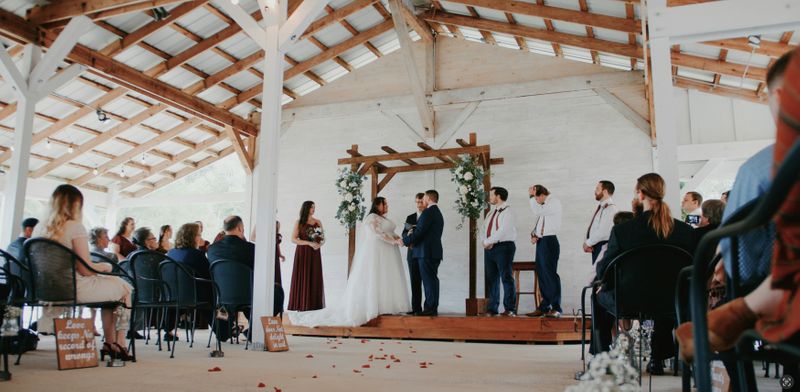
 Photo by 550Park Luxury Wedding Films on Unsplash
Being a wedding officiant is a job with a lot of responsibility, but thankfully, becoming one doesn't require that same level of pressure! Follow these 3 steps to become a wedding officiant so you can help make someone's special day happen.
1. Research Requirements by Area
 Photo by Shardayyy Photography on Unsplash
Location plays a big role in the process of becoming a wedding officiant. Depending on where the ceremony is taking place, you'll have to see what the requirements are to be a wedding officiant in that area. Some states will require you to register at a specific office, while others don't.
Check out this scenario for an example:

Ben has promised to be the officiant for two of his best friends. One lives in Michigan and the other in New York. He applies for the process in both states. Here are the steps he needs to take to become a wedding officiant:
Apply online to be ordained in both states. This is all he has to do for Michigan.
Register at the NYC Marriage Bureau office and pay the $15 fee.
Wait the 2-6 week processing time.
For a list of registration requirements by state click here!
2. Choose an Organization and Apply
 Photo by Beatriz Pérez Moya on Unsplash
Whether you're looking at online or offline options for ordination, you'll likely see different organizations you can apply to. In order to choose the right one for you, choose an organization that is recognized in the area where the wedding will be performed.
Once you have chosen an organization, it is time to submit your application. Fill out any required forms and make sure you have important documents ready. Be mindful of possible fees and the processing time for your application, as these vary by location. States like Massachusetts, for example, have a processing time of 4-6 weeks.
If the registration processing time in your location is longer, be sure to give yourself more than enough time prior to the wedding date.
3. Getting Your License
 Photo by Jonathan Borba on Unsplash
After applying and completing all of the necessary steps, you should receive a wedding officiant license or minister ID, depending on where you applied.
After you receive your credentials, check the laws of the state or county where the wedding will be held to see if you also have to register with the state or county prior to the ceremony.
After you've completed these steps, congratulations! You are now a wedding officiant.
Quiz
Which of these options is the most important to consider when applying to be a wedding officiant?
Take Action
 Now that you know how to become a wedding officiant, you can get started with these steps:
Your feedback matters to us.
This Byte helped me better understand the topic.