
"Content creation is a crucial but time-consuming part of SEO."
— SEO.com blog
Artificial intelligence (AI) is transforming digital marketing, making SEO (search engine optimization) tasks faster and easier.
AI tools can now generate articles, images, and blog posts in minutes.
 Image courtesy of 8photo via Freepik
But what are the pros and cons of AI for SEO — is it a shortcut to success or a risk for your rankings?
AI for SEO: How It Creates Content
AI tools use machine learning, natural language processing, and deep learning to create or improve website content.

Here’s how AI for SEO works:
Machine learning (ML) helps AI learn from lots of examples and get better over time.
Natural language processing (NLP) allows AI to understand, interpret, and generate human language — this is what makes AI useful for writing content and SEO.
Deep learning is a more advanced type of machine learning that handles complex information and helps AI write clear, natural-sounding text.
 Types of AI content:
Generative content: Brand-new text created from a prompt.
Transformative content: Existing content improved or modified, e.g., proofreading, translating, or optimization.
The Pros Of Using AI To Generate Content
AI for SEO can be:
Efficient and scalable: AI can produce large amounts of content in minutes that would take humans hours. This makes it easier to handle multiple projects or write regularly without delays.
Less expensive: Using AI can reduce the need for extra writers for routine content, saving time and money while still maintaining output.
A tool for visibility: AI for SEO needs can help structure content and include important keywords, making it easier for search engines to find your website.
A way around writer’s block: AI can provide ideas, suggestions, or draft content to help you get started when you’re unsure what to write, keeping your workflow moving.
Quiz
Emma runs a small online business and handles all SEO tasks herself. What can AI for SEO help her with? Select all that apply:
The Cons Of Using AI To Generate Content
Using AI for SEO tasks also has its downsides:
The potential for plagiarism and low-quality output: AI doesn’t truly understand the content it writes. Sometimes it can produce mistakes, outdated information, or copy ideas too closely from existing sources. This means you always need to check the content carefully.
Content deviation: AI might not always stick exactly to the topic or instructions. The text it generates can go off-track, include irrelevant information, or miss the main point you want to communicate.
Editing needs: Even though AI can produce a full draft, it usually needs human editing. You may need to fix grammar, adjust style, reorganize sections, or make it sound more natural for your audience.
Limited creativity and idea generation: AI for SEO works by recognizing patterns in existing content, so it can struggle with original ideas or creative approaches. It may not generate unique perspectives the way a human writer can.
Quiz
Alex uses AI to help write blog posts, product descriptions, and social media updates, but notices some issues with the content he receives. Which of the following are potential challenges Alex might face when using AI for writing?
Balancing AI Support with Human Skills in SEO
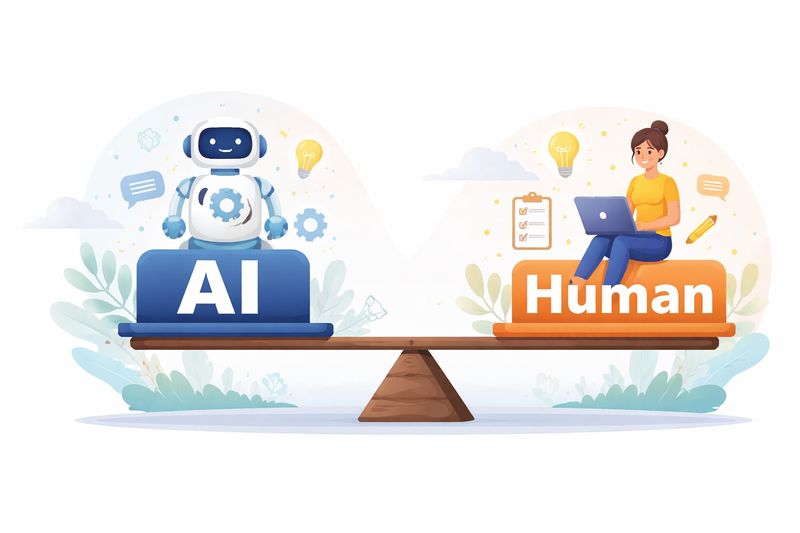 Created by the author using Canva
To strike a balance when using AI for SEO:
1. Let AI handle the routine work and technical fixes — but keep the big decisions and changes human.
AI can handle repetitive work and analyse information, but people should guide the direction and make sure the content feels natural and meaningful. AI is a helper, not the decision-maker.
AI for SEO is also good at spotting website errors and improving technical performance, but people should make the bigger decisions about site structure and long-term direction. AI helps maintain — humans plan ahead.
2. Make sure content still feels human.
AI can write quickly, but people should review and refine the content to keep it accurate, engaging, and meaningful for real readers. AI makes the drafts — humans shape the message.
3. Keep reviewing and improving how you use AI.
SEO is always changing, so regularly check how your AI tools are performing. Use AI insights to guide you, but rely on human judgment to adjust and respond when things change.
Take Action
AI for SEO can give you a head start, but human judgment makes the difference. Let AI begin the work — then build on it.

Your feedback matters to us.
This Byte helped me better understand the topic.